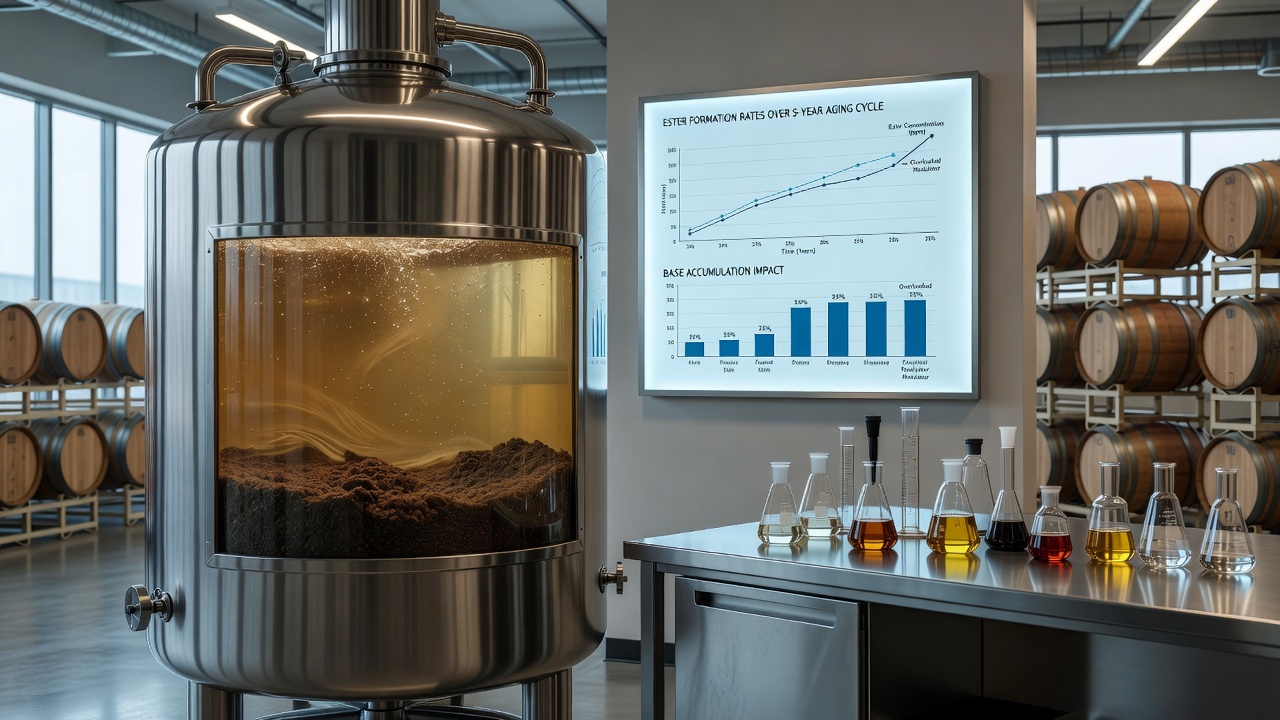
Jakob Müller · 13 October 2026
Base Accumulations in Fermentation Vessels Modulate Ester Formation in Long-Term Spirit Maturation
Base accumulations develop at the bottom of fermentation vessels when yeast cells, proteins, and mineral residues settle during the initial stages of spirit production, and these layers interact with the surrounding liquid over extended periods. Data from distillery monitoring programs show that such deposits alter local pH levels and provide surfaces for continued enzymatic activity, which in turn influences the rate at which esters form and persist through multi-year aging cycles in barrels or tanks.
Formation and Composition of Base Accumulations
During fermentation, yeast metabolism produces carbon dioxide and alcohol while cellular debris and insoluble compounds collect at the vessel base, creating a heterogeneous layer that varies with raw material type and process temperature. Studies conducted at research facilities in Canada and Australia indicate that these accumulations contain autolyzed yeast components along with fatty acids and trace metals that remain after primary fermentation concludes. Observers note that the thickness and chemical profile of this layer depend on vessel geometry and agitation frequency, factors that determine how much material stays in contact with the bulk liquid.
Researchers tracking production batches have recorded that base accumulations continue to release amino acids and nucleotides through autolysis well after the main fermentation ends, supplying precursors that yeast enzymes convert into esters. This ongoing release proceeds at different rates depending on temperature control during storage prior to distillation, with cooler conditions slowing the process and warmer ones accelerating precursor availability.
Mechanisms Linking Accumulations to Ester Modulation
Ester formation occurs when alcohols react with organic acids, and the presence of base accumulations shifts equilibrium by supplying additional acid substrates and altering local redox conditions. Figures from controlled fermentation trials reveal that vessels retaining higher base volumes produce elevated concentrations of ethyl esters and acetate esters compared with those where the layer is removed before maturation begins. The effect extends into aging because residual compounds from the fermentation stage migrate into the spirit and participate in further reactions during barrel storage.
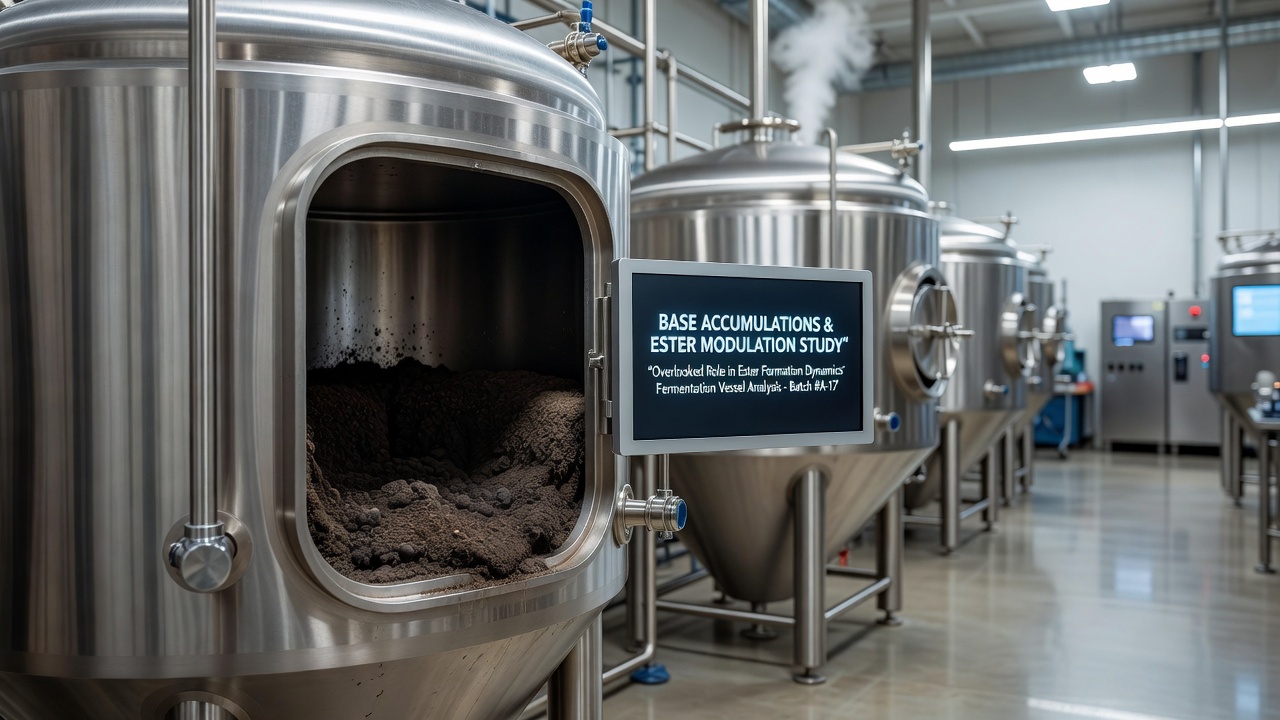
Enzymes bound to the accumulation surfaces catalyze transesterification reactions that would otherwise occur more slowly in clear liquid, according to measurements reported in industry technical bulletins. Those measurements also show that certain metal ions concentrated in the base layer act as cofactors, increasing reaction velocity for specific ester species while inhibiting others, thereby changing the overall flavor compound profile that develops over five to fifteen years of aging.
Effects Across Multi-Year Aging Cycles
Once distilled spirit enters oak containers, compounds originating from fermentation base accumulations interact with wood extractives and oxygen that permeates barrel staves. A report issued in October 2026 by the Australian Wine Research Institute documented that spirits processed with intact base layers retained higher levels of mid-chain esters after ten years compared with filtered counterparts, although total ester concentration eventually stabilized in both cases. The study tracked batches from multiple distilleries and found consistent patterns tied to the initial accumulation chemistry rather than barrel variables alone.
Periodic sampling during aging demonstrates that base-derived precursors continue to influence ester ratios long after distillation because some compounds remain dissolved in the spirit and participate in slow equilibrium shifts. Distilleries in the European Union have incorporated sensors to monitor pH and redox potential near vessel bases, allowing operators to predict downstream ester trajectories before maturation begins. These monitoring approaches rely on data collected over successive production cycles rather than single-batch observations.
Practical Observations from Production Settings
Facilities that retain base accumulations for secondary contact periods report measurable differences in ester profiles when compared with those that transfer liquid immediately after primary fermentation. One distillery in North America adjusted vessel drainage protocols and recorded shifts in ethyl hexanoate and ethyl octanoate concentrations that aligned with changes in base residence time. Such adjustments demonstrate how operational decisions at the fermentation stage propagate through years of aging without requiring direct intervention during barrel storage.
Equipment design also plays a role, as conical-bottom vessels promote more compact accumulations while flat-bottom designs spread material across larger surfaces, altering contact area and diffusion rates. Industry reports compiled by the Beverage Alcohol Technical Conference note that both configurations produce distinct ester outcomes when all other variables remain constant.
Conclusion
Base accumulations in fermentation vessels supply ongoing chemical precursors and catalytic surfaces that modify ester formation kinetics from the earliest production stages through extended aging periods. Measurements collected across different regions and facility types confirm that retention or removal of these layers produces repeatable differences in final spirit composition, independent of later barrel selection. Continued monitoring and documentation of base layer chemistry therefore provide distillers with additional control points for managing flavor compound development over multi-year cycles.