Frankie Hansen · 15 September 2026
Sediment Patterns in Oak Aging Vessels and Their Influence on Preservation Chemistry
Oak aging vessels have served as the standard containers for preserving wines and distilled spirits across centuries because the wood imparts specific compounds while the internal environment controls oxidation rates, and sediment patterns develop inside these vessels as a direct result of interactions between the liquid, the oak surface, and dissolved solids that settle over time.
Formation of Sediment Layers in Oak Barrels
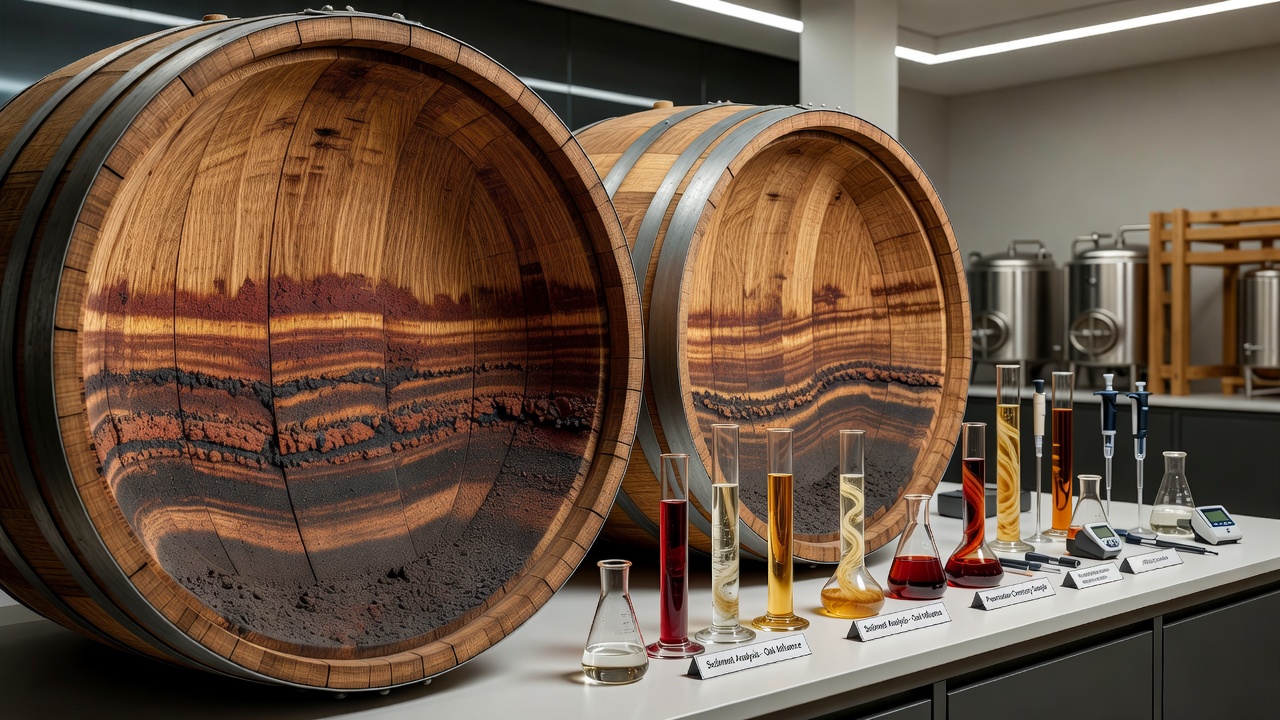
Researchers tracking barrel interiors note that sediment builds in distinct zones rather than uniform coatings, with heavier particles such as grape solids and potassium bitartrate crystals collecting near the bottom while finer colloidal material adheres to the sides and staves, and these patterns shift depending on barrel size, fill level, and temperature cycles that occur during storage. Data from multiple vintages shows that red wines produce thicker lees layers than whites because anthocyanins and tannins bind with proteins and polysaccharides, creating larger aggregates that drop out faster, whereas white wines tend toward lighter crystalline deposits that form rings at the liquid line when evaporation concentrates tartaric acid.
Those who study barrel chemistry point out that the oak itself contributes to sediment through extraction of ellagitannins and lignins that polymerize with wine components, and this process accelerates when barrels receive new wine because fresh acidity and ethanol pull more wood compounds into solution before they precipitate back onto the interior surface.
Chemical Interactions and Preservation Effects
Sediment layers act as a partial barrier that modulates oxygen diffusion from the wood pores into the liquid, and studies indicate that barrels with consistent sediment coverage maintain lower dissolved oxygen levels than freshly emptied or aggressively racked vessels, thereby slowing the rate at which acetaldehyde and other oxidation markers accumulate. The chemistry here involves both physical shielding and active binding, since settled lees continue to adsorb volatile sulfur compounds and metal ions that would otherwise catalyze browning reactions or off-aroma development.
Evidence collected from long-term aging trials demonstrates that the presence of oak-derived sediment alters pH stability in the lower zones of the barrel, and this localized buffering helps preserve color intensity in red wines by limiting the breakdown of polymeric pigments. Observers note that barrels used for multiple fills often develop darker, more adherent sediment films because repeated extraction leaves behind a matrix of wood particles and reaction products that trap subsequent deposits more effectively than clean oak surfaces.
Regional Variations and Measurement Approaches
Winemaking regions apply different barrel management practices that directly influence sediment distribution, with producers in warmer climates frequently rotating barrels to disrupt layering while cooler-climate operations allow sediments to remain undisturbed for longer periods to enhance reductive characteristics. Analytical methods such as endoscopic imaging and micro-sampling now allow researchers to map sediment thickness at various heights without emptying the vessel, and these techniques have revealed that vertical barrels develop pronounced gradients from top to bottom whereas horizontal ones show more even circumferential deposits along the contact line.
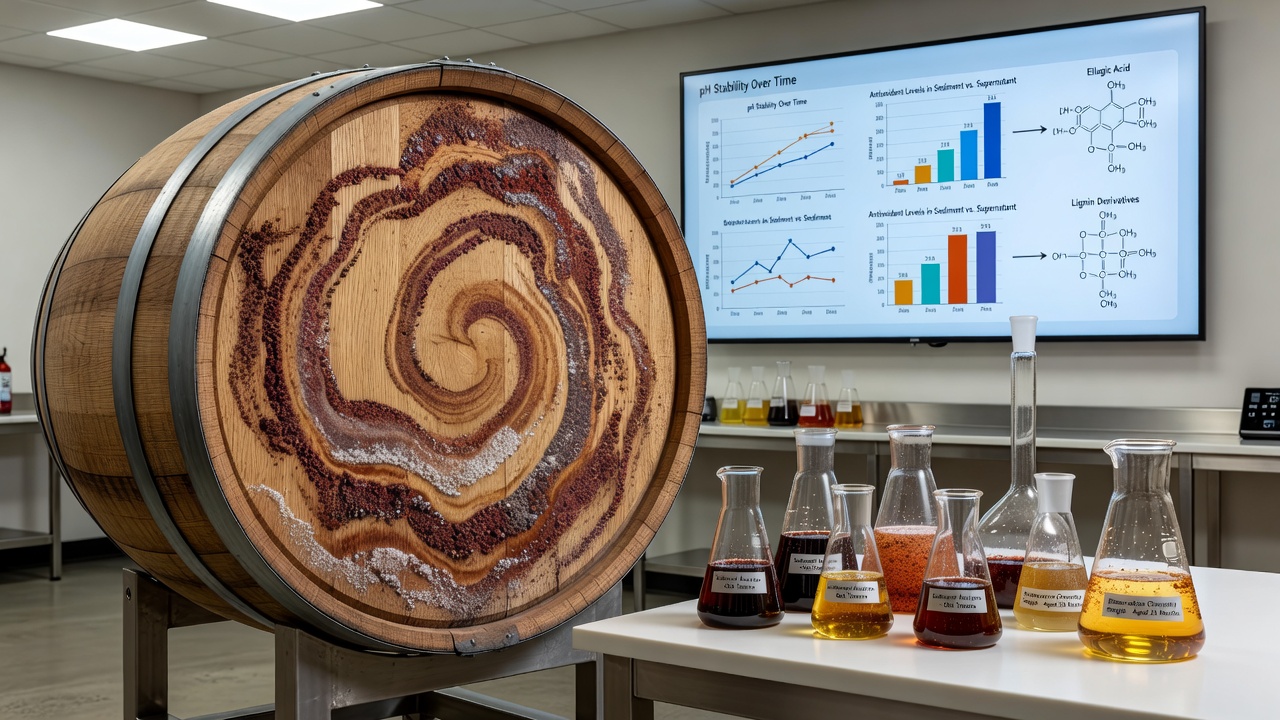
According to findings shared by teh Australian Wine Research Institute, sediment composition varies measurably between new and used barrels, with newer oak releasing higher concentrations of hydrolysable tannins that integrate into the deposit matrix and thereby extend the period during which the vessel continues to influence preservation chemistry. Similar patterns appear in data from French cooperage studies where ellagitannin levels in sediment correlate with reduced microbial activity on the inner surface.
Recent Observations and 2026 Developments
In September 2026 several international research groups released coordinated reports examining how controlled sediment retention affects long-term stability metrics in both still and sparkling wines, and the combined datasets indicate that barrels retaining moderate lees layers showed slower increases in absorbance at 420 nm compared with those cleaned between fills. These studies also tracked changes in free sulfur dioxide retention, noting that sediment-covered staves maintained protective SO2 levels with less frequent additions because the deposits limited oxygen ingress through the wood grain.
Industry monitoring programs have begun incorporating sediment mapping into routine barrel assessments because the patterns serve as indicators of both past usage history and remaining contribution to preservation chemistry, and facilities that log these patterns report more consistent aging outcomes across large barrel inventories. The approach involves non-destructive scanning combined with periodic chemical sampling of the liquid to correlate deposit characteristics with measurable parameters such as acetaldehyde formation rates and color stability indices.
Conclusion
Sediment patterns inside oak aging vessels represent an integrated record of extraction, precipitation, and interaction events that collectively shape the chemical environment during preservation, and continued refinement of mapping and analysis techniques allows producers to better predict and manage these effects across different wine styles and barrel histories. The relationship between deposit morphology and preservation outcomes remains an active area of investigation as new analytical tools provide higher-resolution data on how localized chemistry within the barrel influences the final product.