Frankie Hansen · 29 September 2026
Uncovering Residue Dynamics in Wooden Cask Linings and Their Ties to Flavor Evolution Cycles in Craft Distilleries
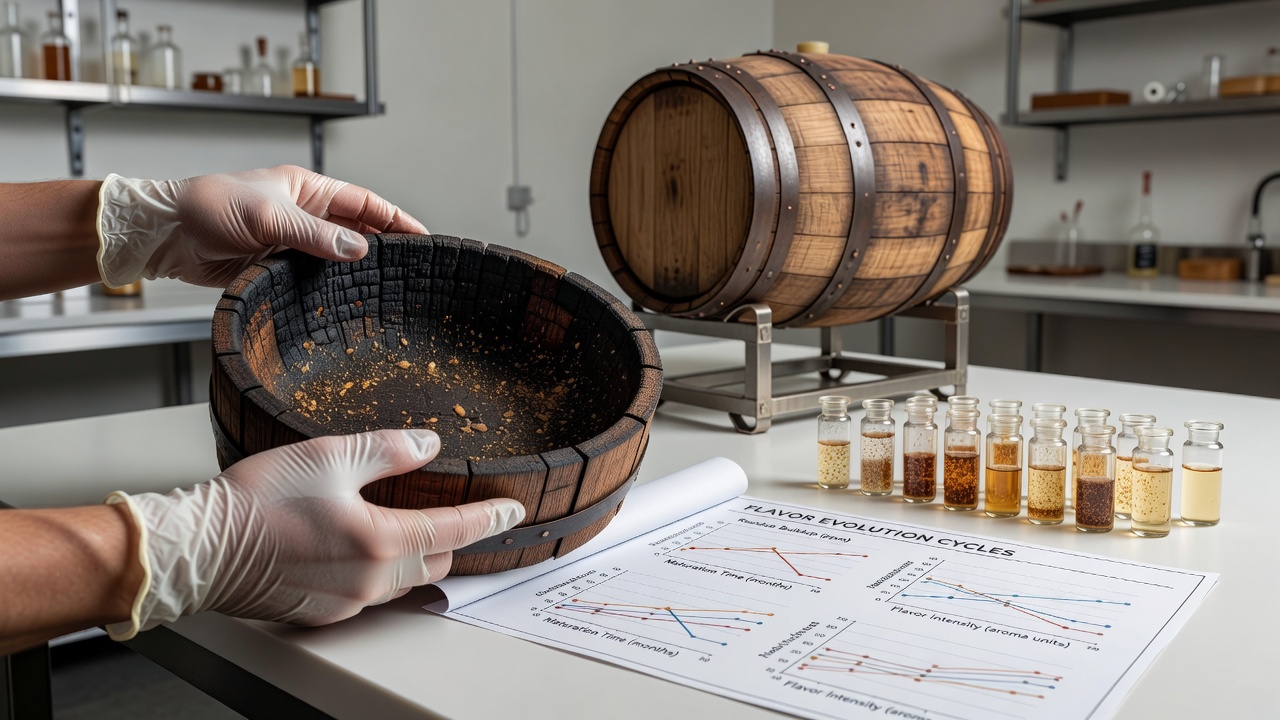
Wooden casks in craft distilleries accumulate residue layers along their inner surfaces through repeated contact with spirits and prior contents, and these layers interact with new distillates during maturation periods that can span several years. Researchers track how compounds from previous fills migrate into the wood matrix and then leach back during subsequent uses, creating cycles that shape ester formation and volatile compound profiles in the final product. Data from barrel monitoring programs show that residue thickness increases most rapidly in the first two years of service before stabilizing, while chemical analyses reveal shifts in lignin-derived phenols and fatty acid esters that directly affect flavor development timelines.
Formation Processes in Cask Linings
Initial charring or toasting of oak staves creates a porous surface that traps volatile congeners from the first spirit fill, and subsequent rotations introduce additional deposits from different mash bills or wine finishes that alter the lining composition over multiple cycles. Studies conducted at facilities across North America indicate that these trapped materials undergo oxidation and polymerization reactions at rates influenced by warehouse temperature fluctuations and humidity levels, which in turn modify the extraction kinetics during later aging phases. Observers note that casks previously holding sherry or port develop thicker, more heterogeneous linings compared with those used solely for new-make spirit, leading to distinct flavor pathways that evolve differently across batches.
Moisture gradients within the stave wood further drive residue movement, pulling soluble fractions toward the interior surface where they concentrate and interact with incoming ethanol. Analytical techniques such as gas chromatography-mass spectrometry applied to core samples demonstrate measurable increases in lactone concentrations and decreases in certain tannin precursors after each rotation, patterns that align with observed changes in spirit color intensity and mouthfeel development. Craft operations in regions with pronounced seasonal temperature swings report faster residue stabilization, whereas more consistent climates extend the period of active chemical exchange.
Connections to Flavor Compound Evolution
Residue layers function as semi-permeable barriers that regulate oxygen ingress and compound diffusion, and this regulation produces measurable effects on esterification rates that peak between 18 and 36 months of maturation in many rye and bourbon expressions. Evidence from longitudinal sampling shows that linings enriched with prior corn-based residues accelerate vanillin release while suppressing certain sulfur compounds, resulting in smoother flavor trajectories during the middle phase of aging cycles. Distilleries that rotate casks between different spirit types document cumulative effects where early-stage residues continue to influence later fills even after several years of intervening use.
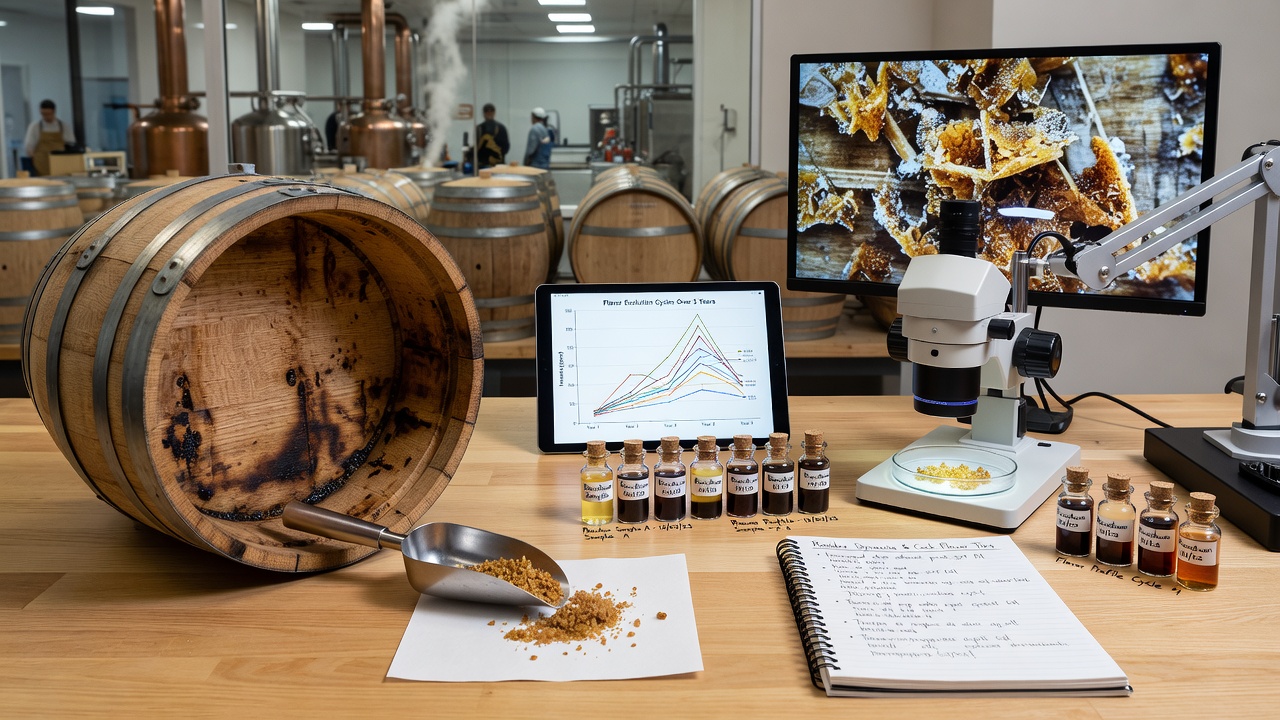
Flavor evolution cycles therefore depend on the cumulative history of each cask rather than on any single fill alone, and operators adjust warehouse placement and rotation schedules to manage these inherited characteristics. Research coordinated through European distilling networks has quantified how residue-derived furfural levels correlate with perceived sweetness notes that emerge after the third year, while parallel work in Australian facilities highlights interactions between wood lactones and residual wine acids that produce unique citrus and dried-fruit attributes in gin and whisky blends. These findings underscore the role of lining dynamics in determining when specific flavor thresholds are reached during extended maturation.
Monitoring Techniques and Industry Applications
Modern distilleries employ non-invasive sensors and periodic core sampling to map residue distribution and predict flavor outcomes, allowing for data-driven decisions on cask reuse and blending strategies. Reports issued by regulatory bodies such as those overseeing spirits production in Canada document how consistent lining management correlates with reduced batch-to-batch variation in congener profiles. In September 2026 several collaborative projects between university laboratories and craft producers are scheduled to release updated models that integrate residue thickness measurements with real-time warehouse environmental data to forecast maturation endpoints more precisely.
Implementation of these approaches varies by scale, yet smaller operations often combine traditional sensory evaluation with targeted chemical assays to track the same underlying processes. Trade organizations focused on distilled spirits have compiled datasets showing that proactive lining assessment can extend effective cask service life by 15 to 25 percent while maintaining target flavor specifications across successive production runs. Such practices integrate residue dynamics directly into production planning rather than treating them as secondary variables.
Conclusion
Residue dynamics within wooden cask linings establish persistent chemical environments that govern flavor evolution throughout repeated aging cycles in craft distilleries. Measurements of compound migration, oxidation rates, and interaction kinetics provide objective indicators that link lining history to specific maturation outcomes. Continued refinement of monitoring methods and cross-regional data sharing supports more accurate management of these interactions, ensuring consistent flavor development across diverse production contexts.